
I mix and match spring greens with abandon. When the dandelion leaves get too bitter to eat, I move on to the less bitter species of edible greens. Dandelion leaves are too bitter now in my neck of the woods. They get too bitter as soon as they start flowering. If you need something quick, just move along to the greens that have less bit. That would include Bedstraw and Chickweed.
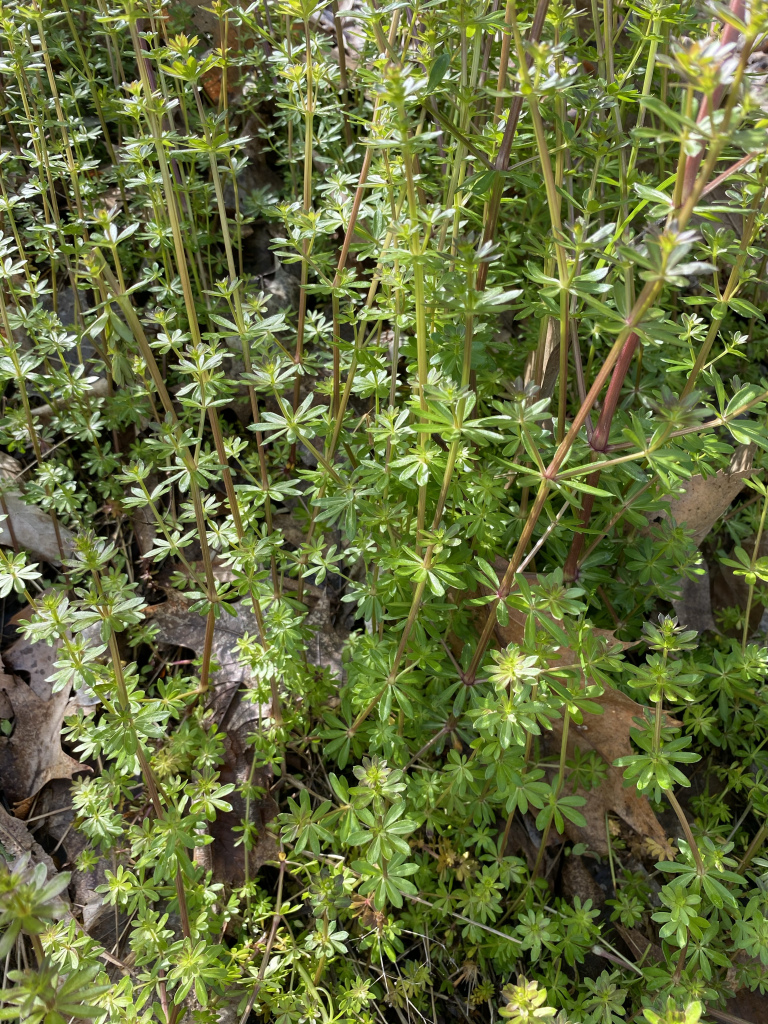
Bedstraw is coming up this time of year. It is found in moist shaded areas in my forests. I came upon this patch while running along a local rail-trail. This plant is odd. In early spring, it is tender enough to eat in salads. It has a smooth square stem with whorls of 6-8 leaves erupting from the same place along the stem. Quickly, as the season progresses, these tender stems turn tough but stay supple, sprawling across the ground. They also grow Velcro like hairs along the stems and leaves. This makes them fun to use to play tricks on friends. While hiking, I’ve been known to decorate an unsuspecting person’s back with streamers of them. But the best thing about Bedstraw this time of year is- it isn’t bitter and it is great to cook with instead of spinach. I collect only the top tender parts of the leaves and stems. I tell how far to cut down the stem by biting it. If it can be bitten without pulling hard, then I cut it there. I collect as much as I need for the recipe I have in mind. Like Dandelion greens, this plant has a short window of being tender and salad-worthy.
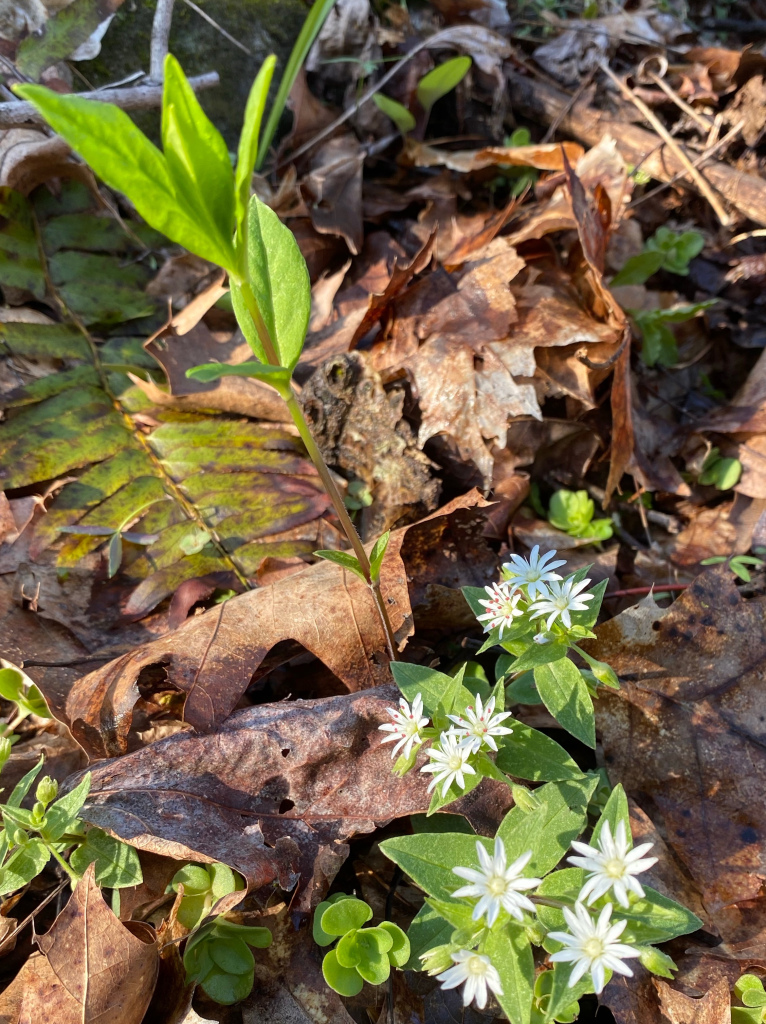
Chickweed is in season now. I have eaten both Star Chickweed and Common Chickweed already this spring. This recipe I’m sharing is made with the Star Chickweed plants in this photo. I ate both the stem and leaves in the upper left and the flowering stalks and leaves in the lower right and am still here a week later to tell the tale. I find Chickweed a lovely spinach substitute. You can find Common Chickweed just about everywhere; it’s common. Star Chickweed is a classier plant found in partial shade, or dappled sunlight as some would say. I find mine along woodland trails in Appalachia. It’s easy to pick. I try to pick it clean to prevent work back in my kitchen so I take my small scissors and snip off the tender tops as clean as I can, shaking off any bugs or leaf litter as I go. It doesn’t take me long to get a serving if the site is plentiful. I don’t pick where there isn’t a ton because I want to make sure to sustainably harvest, not that I’ve run into anyone else foraging, ever, I know you are out there. I know Betty and Elaine are out there now looking for wild edibles.
Ingredients
- 1 cup (about a half an ounce, dry) Bedstraw
- 1 cup (about a half an ounce, dry) Chickweed
- 1 teaspoon kosher salt plus more
- 3 large eggs
- 1 cup yogurt
- 1/4 cup all-purpose flour
- 2 tablespoons vegetable oil plus more for skillet
- 4 ramp leaves (or scallions), thinly sliced, plus more for serving
- 1/4 cup (1/2 stick) salted butter, melted
Optional Toppings
- Yogurt or sour cream
- Smoked Salmon
- Capers
- Cook Bedstraw and Chickweed together in a small saucepan of boiling salted water until tender, about 3 minutes. Drain, squeezing out excess moisture.
- Purée Bedstraw, Chickweed, eggs, yogurt, flour, 2 tablespoons oil, and 1 teaspoon salt in a blender until smooth. Transfer batter to a medium bowl and stir in thinly sliced ramps. (Batter should be thick, but runny enough for a 1/4 cup to spread to make 4 inch pancakes in the hot skillet ; stir in water by tablespoonfuls if too thick).
- Heat a lightly oiled large nonstick skillet or griddle over medium heat. Working in batches, add batter to skillet by 1/4-cupfuls, spreading out to 3″-4″. Cook pancakes until bubbles form on top, about 2-3 minutes. Flip and cook until pancakes are browned on bottom and the centers are just cooked through, about 2 minutes longer.
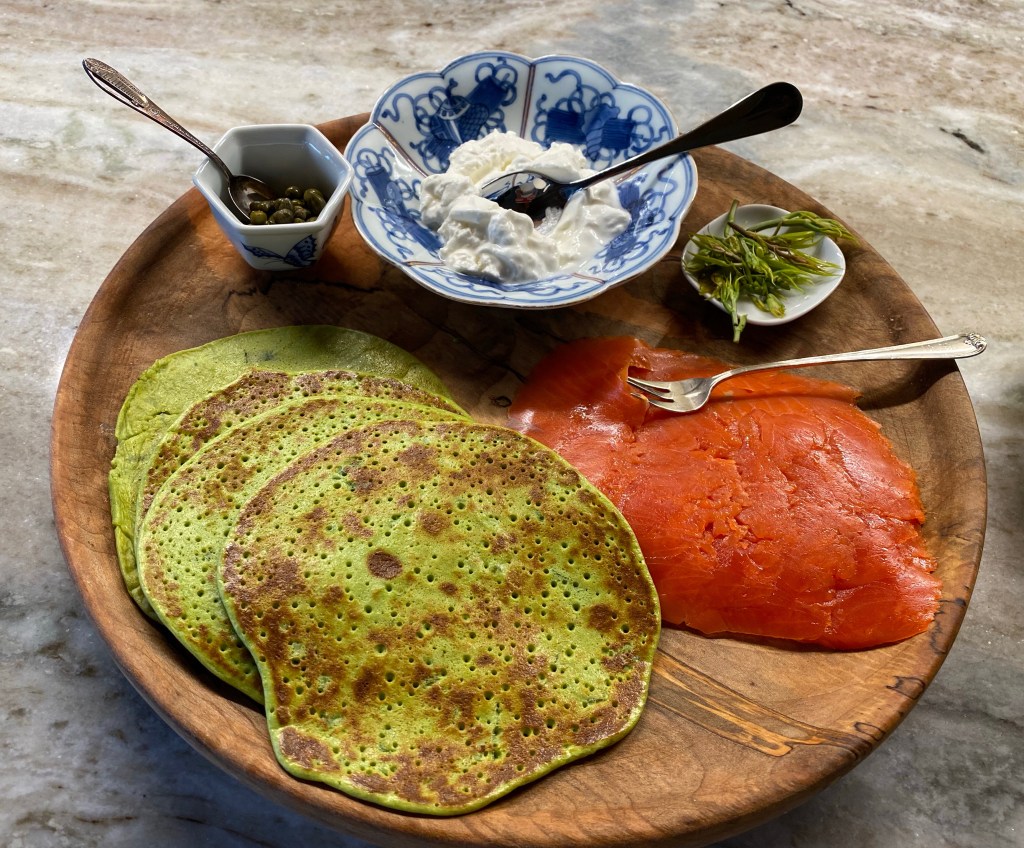
- Serve pancakes topped with your choice of toppings. I chose to spread yogurt first, then add a slab of smoked salmon, topped by a small group of capers and some Greenbrier tendrils I had just collected. Yum.
 You can eat that?